


Spark and Performance - MSD Ignition System Maintenance on a Sprintcar

Updated: Mar 29
Inspection Routine
A proper maintenance routine starts with inspection, because ignition faults on a sprintcar often begin with vibration, dirt, heat, or moisture rather than with a sudden total failure. Before and after each meeting, inspect the magneto body, the mag box, the generator wire, the electrical connectors, the coil connections where fitted, and all plug leads for looseness, rubbing, hardening, cracked insulation, or signs of heat damage. The cap and rotor should also be checked closely, because any crack, corrosion, tracking mark, or burnt terminal can interrupt spark delivery and create misfire that feels like a fuel or tuning problem.
A sudden total failure can still occur when the MOSFET transistors fail or when the coil fails, so inspection should never assume that every ignition problem will show warning signs first. The cap should also be removed after the A Main to let the generator cool down properly and to prevent it from sweating internally. That internal moisture leads to corrosion, which lowers output and weakens spark performance. When spark strength drops away, the engine can begin to run rich because the ignition no longer burns the mixture as effectively as it should.
Cleaning and Washing
Cleaning has to be done with care, because sprintcars are exposed to dirt and wash-down routines that can easily create ignition trouble if water reaches the wrong parts. It is advised that you remove the mag box before washing a sprintcar, disconnecting the generator wire from the magneto, unplugging the electrical connections, and covering or protecting the magneto, so the system stays dry. That is one of the most important habits in ignition maintenance, because a magneto system can be extremely reliable when kept clean and dry, but water trapped around electrical parts can quickly turn into a hard-starting or misfiring race car.
Use a dry cloth, a soft brush, and compressed air where needed to remove dust, clay, and loose grime from the magneto area, wiring, and surrounding engine bay rather than blasting those parts directly with water. After washing, dry the engine compartment thoroughly and pay special attention to low spots, connectors, boots, and the areas around the ignition box and magneto where moisture can sit out of sight. Once everything is dry, reconnect the system carefully and make sure every plug, terminal, and lead is fully seated before the next startup.
Once in a while, the cap and leads should also be washed properly to remove built-up dirt and oil. A practical method is to lay them out on the ground, spray them with degreaser, and wash the contamination off thoroughly. They should then be left to air dry for a full day, and each lead should be popped off the cap and blown dry before refitting, so no trapped moisture remains inside the terminals or boots.
Service Habits
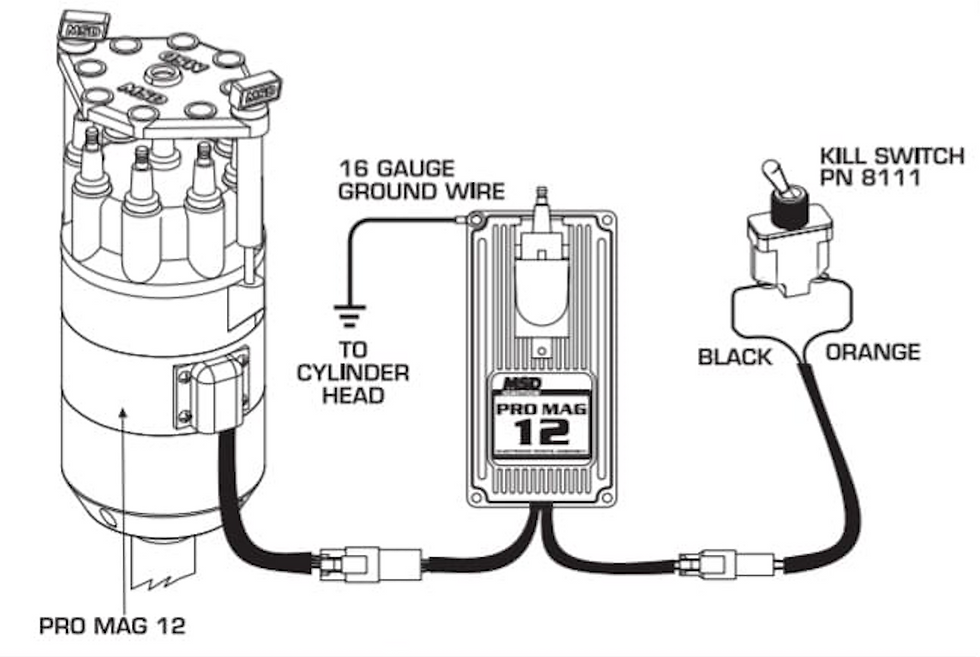
The mag box deserves the same attention as the magneto itself, because it is the control centre for the Pro-Mag system and a poor connection, vibration damage, or moisture issue at that point can affect the full spark event. Its mount should be secure, the plugs should fit tightly, and the wiring should be supported so it is not pulling against the terminals or chafing against nearby brackets and tubing.
On a sprintcar, where vibration is constant and maintenance cycles are frequent, small wiring problems become big race-night problems very quickly. The magneto should also be treated like a precision race component rather than a sealed part that can be ignored once installed. MSD notes that the Pro-Mag uses sealed ball bearings for long life and a magnetic pickup that does not require the kind of adjustment associated with old-style points, but the surrounding hardware still needs regular checking and cleaning.
A system can still lose performance if the cap is tired, the leads are damaged, the electrical plugs are dirty, or the unit has been exposed repeatedly to moisture and contamination. Good maintenance on a sprintcar ignition system is mostly about consistency: inspect it after each use, protect it during washing, keep every connection clean and tight, and replace questionable parts before they become a failure.
The magneto should be sent away for servicing whenever the engine is rebuilt, and points boxes should be serviced during the off-season. As a regular habit, the rotor button tab should be rubbed with 600-grit wet-and-dry paper to clean off the arcing marks left behind in use. Points boxes should also be mounted on vibration rubber mounts to help protect them from the constant harshness of sprintcar operation.
Spark plugs should have their gap checked regularly, which also helps remove the arc balls that build up on the electrode and contribute to a fuzzy spark. The bearings can fail as well; they are similar in that sense to a right rear birdcage bearing, because they are happy rotating but less happy carrying thrust loads. In a magneto, the rotating magnets are trying to pull toward the stator, so the bearings must cope with rotational load, thrust load, and heat all at once.
Teams should also ohms-test the coil and document the readings so changes can be tracked over time before a failure occurs. The leads should be ohms-tested as well, especially the coil lead, because rising resistance there can quietly reduce spark performance without creating an obvious visible fault.
Why This Matters
This approach suits the way sprintcars are actually raced, because the common 360 and 410 magneto-and-mag-box systems depend on clean trigger signals, solid electrical connections, and dry components to deliver the strong spark the engine needs. When that maintenance is done properly, the reward is simple: easier starting, cleaner running, better throttle response, and an engine that gives the driver the same ignition performance every time it hits the track.
These tips were prepared with input from Gary Meehan of Monster Ignition.


Comments